Overwhelm can show up as racing thoughts, a tight chest, irritability, or a sense that everything is urgent at once. Calm isn’t a personality trait—it’s a set of skills that can be practiced in small moments. The goal isn’t to erase stress; it’s to interrupt escalation so you can return to workable thinking and make the next best move.
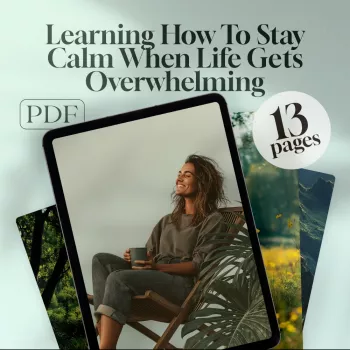
If you’d like a structured, ready-to-use reference for stressful moments, Learning How To Stay Calm When Life Gets Overwhelming (Digital Guide + Mindfulness Checklist) keeps short exercises and a printable-style checklist in one place.
Overwhelm isn’t always dramatic. Often it’s a subtle pileup that eventually spills over. Common signs include mental fog, decision paralysis, snapping at others, shallow breathing, trouble sleeping, or doom-scrolling that feels hard to stop.
It tends to rise when demands exceed available resources—time, energy, support, or clarity. When that gap widens, the nervous system shifts into threat mode: attention narrows, the body prepares for action, and even small problems can feel huge.
A helpful reframe: stress is part of life. The skill is recognizing the early signals and using quick interventions to reduce intensity before you spiral. For more background on how stress affects the mind and body, the American Psychological Association’s overview of stress is a solid starting point.
When your body is revved up, reasoning your way into calm is harder. Start with physiology.
Breathe out slowly first, then inhale gently. Repeat for 5–8 cycles. This can reduce “breath-stacking,” where you keep taking air in without fully letting it go.
Try box breathing (inhale 4, hold 4, exhale 4, hold 4), or use a longer exhale: inhale for 4, exhale for 6–8. A longer exhale can cue the body toward relaxation.
Unclench your jaw. Drop your shoulders. Soften your belly. Then do a 10-second full-body squeeze (hands, arms, legs, glutes), and release. This gives your body a clear “off switch” signal.
Splash cool water on your face, hold a cool pack briefly, or take a brisk 2-minute walk to discharge stress energy. Movement helps when you feel stuck, keyed up, or frozen.
| Situation | Fast tool (1–2 minutes) | Why it helps |
|---|---|---|
| Racing thoughts | Inhale 4, exhale 8 for 6 rounds | Longer exhale signals safety and slows physiological arousal |
| Panic-y body sensations | 5-4-3-2-1 grounding with slow breathing | Shifts attention from fear to present sensory input |
| Angry or on edge | Wall push (30 seconds) + shoulder drop | Uses muscle effort to release stress energy safely |
| Frozen and unable to start | 2-minute “tiny step” timer | Reduces the size of the task and restores momentum |
| Overstimulated | Lower lights + remove audio for 60 seconds | Cuts incoming stimuli so the brain can re-regulate |
Once your body is slightly calmer, use a simple script to reduce mental chaos.
Say (out loud if possible): “This is overwhelm. My nervous system is activated.” Labeling can reduce intensity because it separates you from the surge.
Make two quick columns on paper or notes app: (1) what is objectively true, and (2) what your mind is predicting. This creates distance from catastrophic assumptions.
Learning How To Stay Calm When Life Gets Overwhelming | Digital Guide to Ways to Calm Yourself Down, Stress Relief eBook, Mindfulness Checklist is designed for quick reference, with practical resets and a checklist you can reuse.
If family dynamics are a major source of stress, consider adding a targeted support resource like Raising Confident Teens: A Parent’s Guide to Nurturing Self-Esteem to help reduce daily friction and strengthen communication at home.
Try exhale-first breathing or inhale 4/exhale 8 for 60–90 seconds, then do a quick 5-4-3-2-1 grounding scan. After that, choose one small next step to regain momentum.
Use micro-practices: a one-breath reset, a three-sense check, or a mindful transition like opening your laptop with a slower exhale. Consistency matters more than duration when life is busy.
Consider professional help if overwhelm persists for weeks, includes panic symptoms, severely disrupts sleep, affects daily functioning, or involves thoughts of self-harm. If you’re in immediate danger or at risk of harming yourself, contact emergency services right away.











Leave a comment