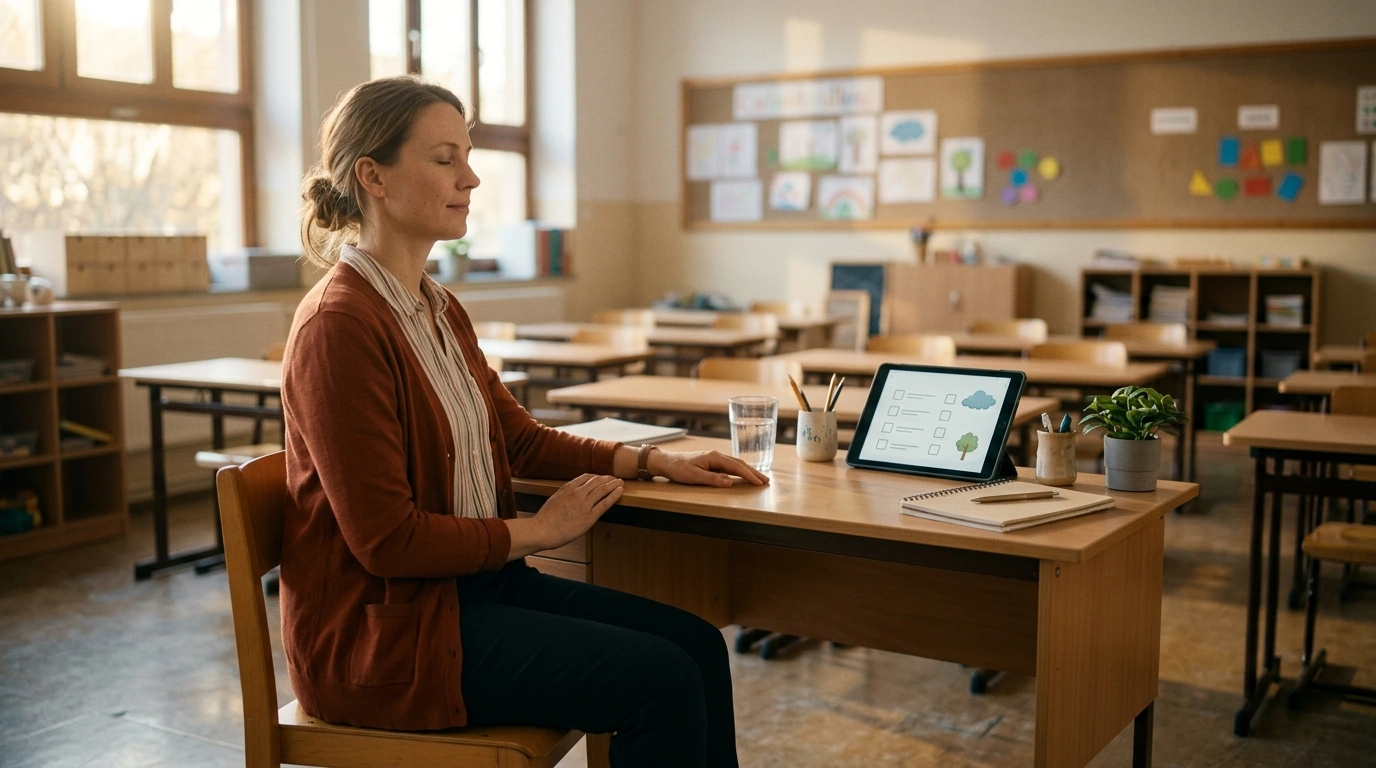
Busy school days can turn stressful fast—before the first bell, between transitions, and long after dismissal. A small set of repeatable mindfulness habits can create steadier mornings, calmer reactions, and a more grounded classroom climate. This guide lays out a practical daily checklist and realistic routines that fit into a teacher’s actual schedule, plus a printable-style structure that can be used immediately.
Mindfulness doesn’t have to mean long meditations or a complete lifestyle reset. The most sustainable version for educators is short, cue-based, and designed for real classrooms. Research also supports mindfulness for stress reduction and well-being when practiced consistently in manageable ways (see APA and Harvard Health).
A teacher’s daily survival kit is a short list of habits that are easy to repeat on high-stress days—not a personality overhaul or another initiative to “keep up with.” It focuses on three moments that commonly trigger overwhelm: arrival/prep, in-class transitions, and the end-of-day reset.
The key is using cues that already happen (doorway, bell, computer login, lunch break) to anchor mindful pauses without adding more tasks. Consistency matters more than intensity: a 30–90 second practice done daily usually beats a 20-minute session done once a month.
Most importantly, a calm classroom starts with regulated adults. This kind of checklist prioritizes the teacher nervous system first, then builds student-facing routines. When you feel steadier, boundaries get clearer, directions get shorter, and your tone does more of the “work.”
Use this checklist like a menu. Start with two items, repeat them for a week, then add one more. The goal is a predictable rhythm you can rely on—even when the day gets weird.
| Moment | Habit | Time | Why it helps |
|---|---|---|---|
| Before the first bell | 3 slow breaths + one intention word | 1 min | Sets emotional tone and reduces reactive start |
| Before students enter | Clear one area + write opener instruction | 2 min | Creates predictability and lowers transition friction |
| Between activities | Exhale longer than inhale (2–3 rounds) | 30 sec | Supports nervous-system downshift during transitions |
| When behavior escalates | Pause → label emotion → respond with one clear direction | 10–20 sec | Prevents escalation and supports calmer communication |
| Midday break | Hydrate + tension scan (jaw/shoulders/hands) | 2 min | Stops stress from stacking across periods |
| After dismissal | Reset one surface + tomorrow’s first step | 3 min | Ends the day with closure and reduces after-hours mental load |
Mindfulness can be baked into what you already do—especially routines that increase predictability (a core support for many students). These practices also align naturally with SEL frameworks focused on self-management and relationship skills (see CASEL).
If a ready-made structure would help, The Mindful Teacher’s Daily Survival Kit (PDF) is designed as a teacher-friendly mindfulness checklist with short daily habits geared toward calmer classroom routines. The digital PDF format makes it easy to print, annotate, or keep on a tablet for quick access during the school day.
For educators supporting advisory, mentoring, or family communication, Raising Confident Teens: A Parent’s Guide to Nurturing Self-Esteem can complement classroom efforts by reinforcing consistent, supportive language at home—especially helpful when students are navigating stress, identity, and motivation.
Short, consistent practices tend to work best—think 30–90 seconds tied to cues like the bell, the doorway, or your computer login. Frequency matters more than duration when your goal is steadier reactions throughout the day.
Yes—self-regulation often strengthens authority because boundaries come out clearer and calmer. Neutral language, fewer words, consistent cues, and a steady tone typically reduce escalation and improve follow-through.
Use a minimum viable routine: one breath at arrival, one transition pause, and one end-of-day closure step. Add a quick recovery practice after work (five minutes of walking, music, or quiet) to prevent stress from carrying over.












Leave a comment