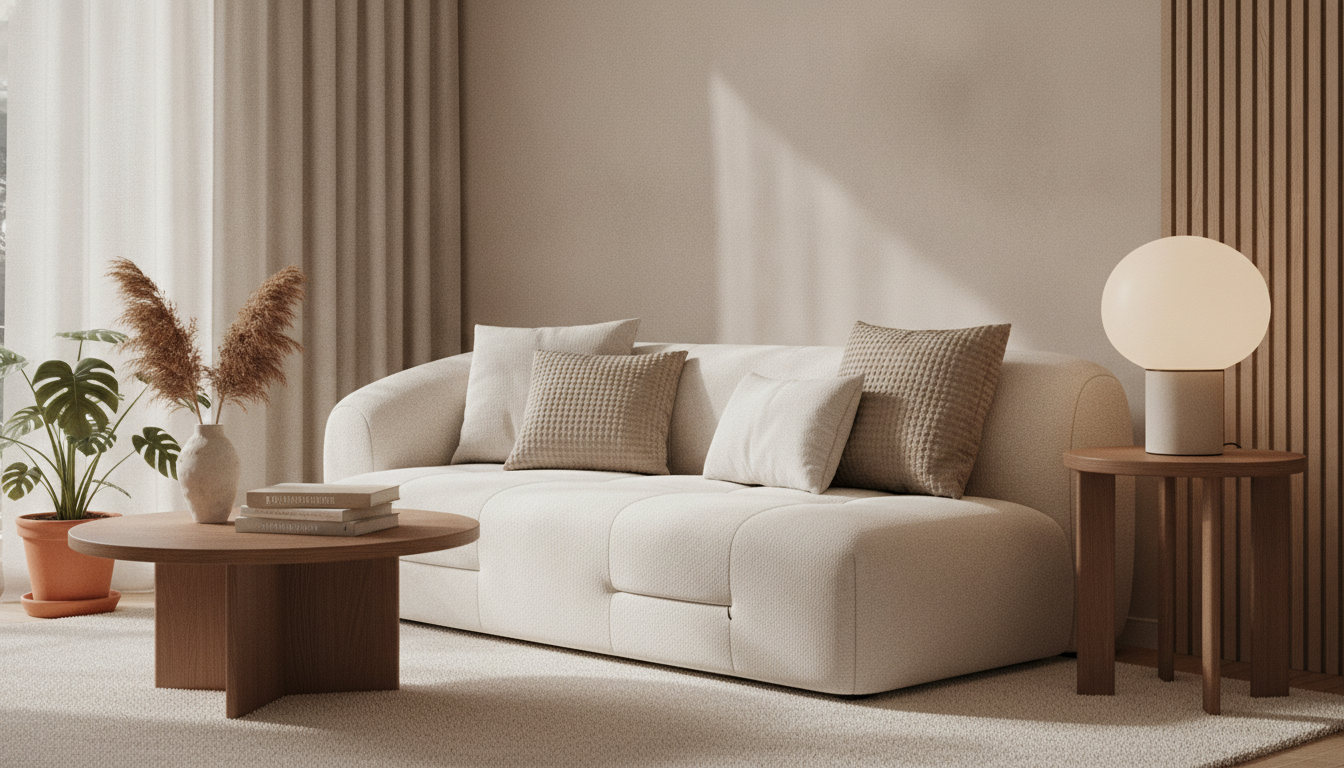
A cozy corner usually starts with warm, softened colors rather than stark contrasts. Cream, oatmeal, warm gray, muted green, dusty blue, and clay or terracotta tones can make a small area feel inviting without overwhelming it. Choose a palette that complements the rest of your room, then use texture and lighting to add warmth.
Use a warm neutral as the foundation for your corner. Cream, ivory, sand, and greige work well on larger pieces or soft furnishings because they feel gentle and are easy to pair with other colors. If your room already has cool gray or white finishes, bring in a warmer accent so the corner doesn’t feel flat or chilly.
Muted shades tend to feel restful in a small space. Try sage or olive for a natural touch, dusty blue for a calm note, or terracotta for a little warmth. You don’t need to use every color at once: choose one main accent and repeat it in a cushion, throw, small rug, or decorative object. Repeating a color helps the corner feel considered rather than cluttered.
A darker detail can give a pale palette definition. Charcoal, deep brown, or forest green might work in a lamp base, frame, or small accessory. Keep strong colors to a few accents, especially if the corner is tight. Large blocks of saturated color can make a compact spot feel visually busy.
Color is only part of the effect. Pair soft shades with tactile materials such as woven fabric, knitted throws, natural wood, or a textured rug. A warm-toned lamp can also make cream, beige, and earthy colors feel cozier in the evening. If you’re choosing items for a small corner, prioritize pieces that serve a purpose and keep the floor and surfaces easy to move around.
For more ideas on keeping a compact room calm and welcoming, visit our guide to cozy minimalism in small spaces.
Choose a few useful pieces, keep the palette coordinated, and leave some open space around them. A basket or compact storage piece can keep everyday items close without letting them spread across the corner.













Leave a comment