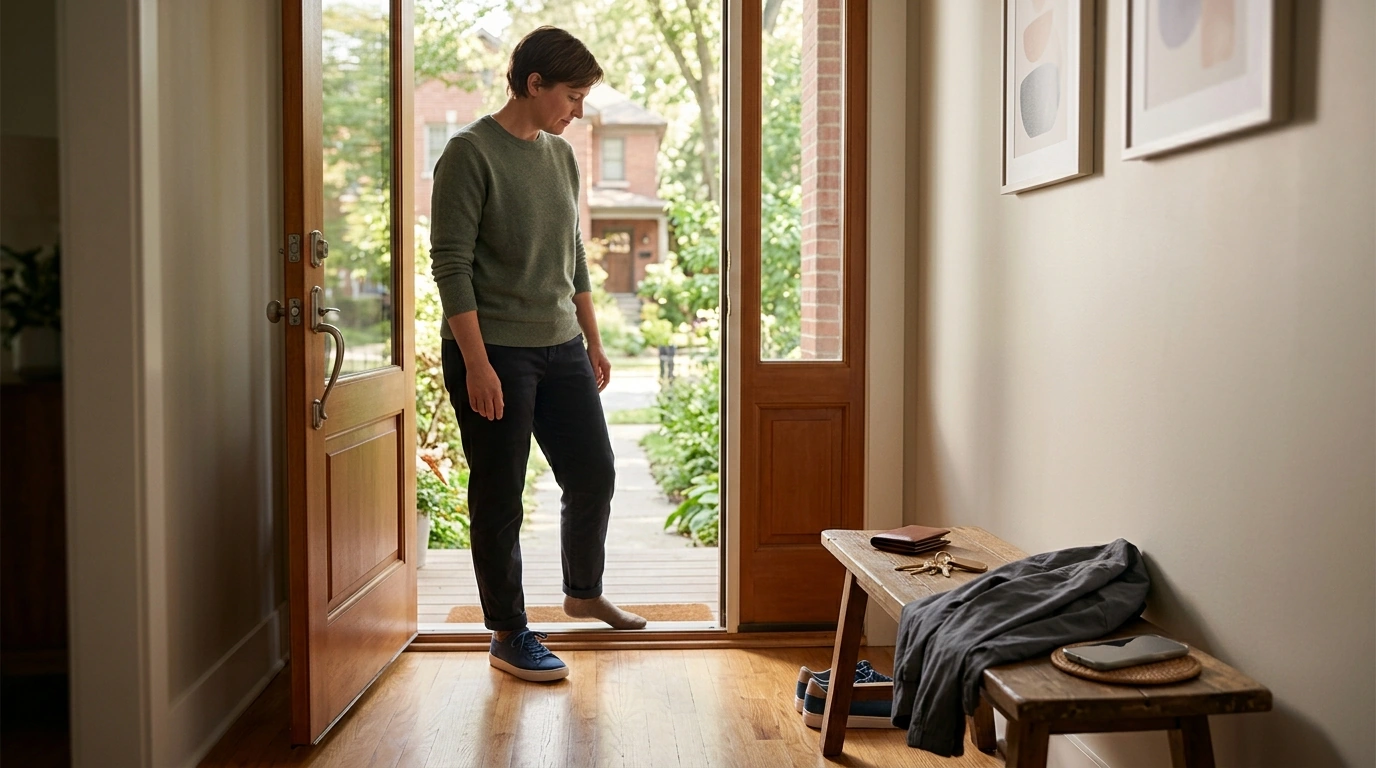
Leaving the house can feel overwhelming when anxiety, low mood, or burnout drains motivation. The goal isn’t to “push through” with a huge burst of willpower—it’s to reduce friction, rebuild confidence, and make outings feel doable again through gentle, practical steps. When you aim for small wins you can repeat, getting out the door becomes less like a test and more like a skill you’re relearning.
If you’re stuck at home more than you want to be, it’s rarely because you’re “lazy.” Common blockers include anticipatory anxiety (dreading what might happen), low energy, shame/avoidance loops (“I already skipped yesterday, so why try”), sensory overload, and fear of panic symptoms. These can stack together until even simple errands feel too costly.
Motivation often shows up after action, not before it. That’s why a tiny start—standing at the door, stepping outside for 30 seconds—can unlock momentum. It’s not about pretending you feel great; it’s about giving your nervous system a manageable experience of “I can do this part.”
Signs it may be more than a temporary slump include persistent withdrawal, daily dread, rumination that keeps you inside, and reduced functioning (work, school, relationships, self-care). If any of that sounds familiar, a compassionate baseline helps: aim for “slightly better than yesterday,” not perfect streaks.
A confidence ladder is a list of 5–10 steps from easiest to hardest. Each step is small enough that your brain can say, “Okay, maybe.” Instead of jumping straight to a busy store, you build tolerance gradually—repeating the same rung until it feels more neutral, then leveling up.
| Step | Action | Time | Helpful support |
|---|---|---|---|
| 1 | Open curtains and stand by the door | 1–2 min | Slow breathing; calming playlist |
| 2 | Step outside and look around | 30–60 sec | Grounding: name 5 things you see |
| 3 | Walk to the end of the driveway/hallway | 2–3 min | Comfort item; sunglasses/headphones |
| 4 | Short walk to mailbox or corner | 5–10 min | Text a friend before/after |
| 5 | Quick errand at a quiet time | 10–20 min | Simple list; self-checkout if preferred |
When leaving home feels hard, preparation is a kindness to your future self. The goal is to make the “launch” so simple you can do it on a low-capacity day.
If you want a structured set of prompts you can keep on your phone, Step Out: Your Simple Guide to Finding Motivation and Leaving the House with Confidence (Digital Download) is designed for exactly this: reducing friction, building tiny routines, and turning “I can’t” into “I can do the next rung.”
Anxiety often spikes once you’re out in the open—especially if you’ve stayed inside for a while. Bring tools that help your body settle in real time.
For deeper reading on anxiety and panic symptoms, these overviews can help normalize what’s happening in your body: NIMH — Anxiety Disorders, APA — Understanding anxiety, and NHS — Panic disorder.
If family stress is part of what makes leaving the house feel heavier, confidence-building at home can matter too. Raising Confident Teens: A Parent’s Guide to Nurturing Self-Esteem (Digital Download) offers practical ways to build steadier self-esteem and communication—useful when anxiety, avoidance, or low mood affects the whole household.
The Step Out digital guide is built for real-life “stuck” days—when you want to leave home, but your body and mind resist.
Pause for 30–60 seconds and regulate first: shoulders down, a slower exhale, and a quick grounding check (name a few things you see). Then commit only to the smallest next step—like standing outside for 30 seconds—while reminding yourself you’re allowed to go back in; repetition builds tolerance.
Use action-first strategies: do a two-minute launch, reduce friction with simple prep, and pick a tiny destination with a time limit. Track effort (showing up) and link outings to a routine so consistency matters more than intensity.
Yes—short, repeatable outings are often more effective than occasional big pushes. Start where you can succeed, repeat that step until it feels easier, and move up your confidence ladder gradually (and step back down on tougher days).













Leave a comment