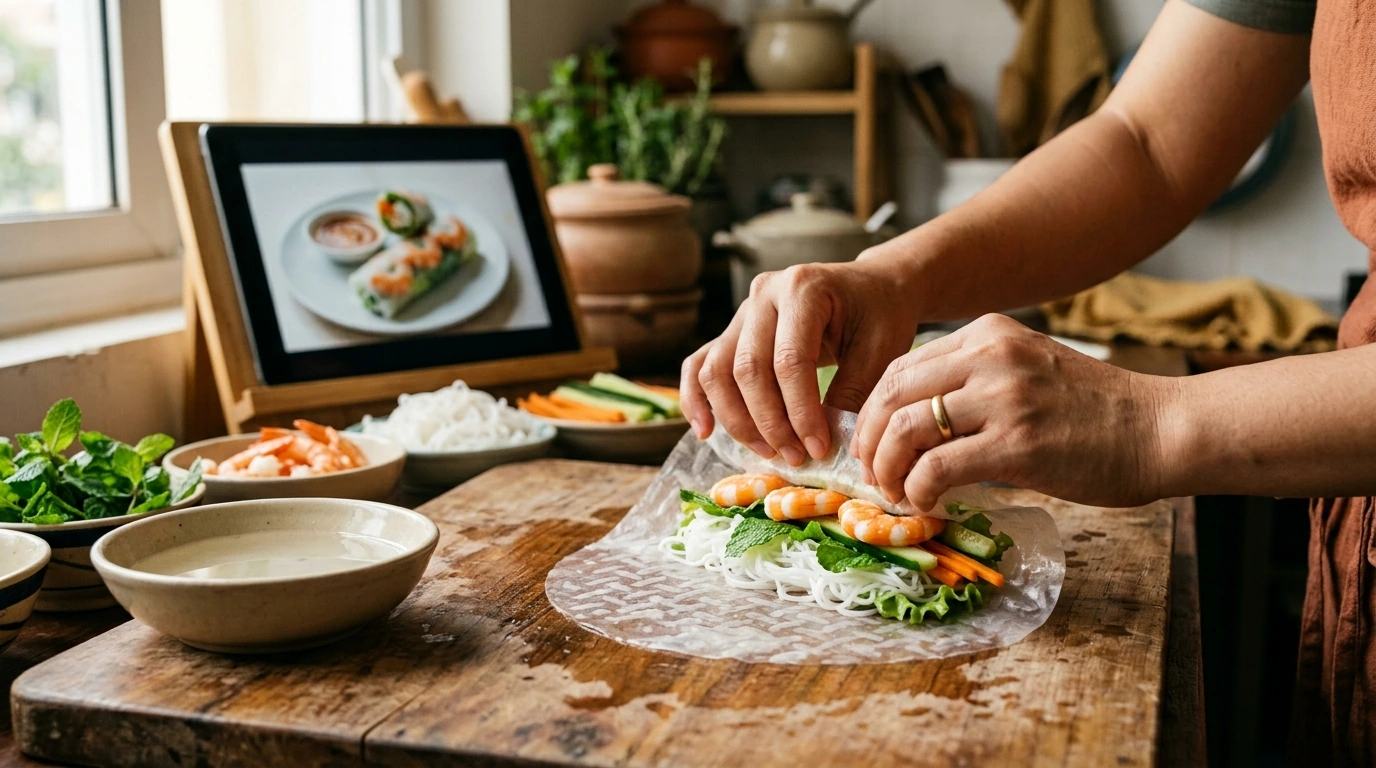
Vietnamese rolls are built on contrast: cool herbs against warm protein, crunchy vegetables against tender noodles, and wrappers that range from delicate and translucent to crisp and blistered. Once you understand a few naming cues, choose the right wrappers, and control moisture, you can turn out rolls that look neat, taste balanced, and dip beautifully.
In Vietnamese, “bánh” is a broad umbrella term tied to foods made from flour, rice, or starch. Depending on context, it can point to cakes, dumplings, crepes, and—very often—wrappers used for rolling. That’s why you’ll see “bánh” across many roll styles, even when the finished dishes look totally different.
Roll names may reference the wrapper (like rice paper), the cooking method (fresh vs. fried), or regional preferences (north vs. south). Learning these patterns helps when shopping at Asian markets, where multiple wrappers may sit side by side with similar-looking packaging.
If you’re new to Vietnamese cooking, start by identifying the wrapper and whether the roll is served fresh, fried, steamed, or grilled. From there, it’s easier to build fillings that “fit” the style—both in texture and seasoning.
| Style | Wrapper | Typical fillings | Cooking/Serving | Beginner tip |
|---|---|---|---|---|
| Fresh rice paper rolls (gỏi cuốn) | Rice paper (bánh tráng) | Shrimp or pork, rice vermicelli, herbs, lettuce | No-cook; served with dipping sauce | Hydrate rice paper briefly; let it soften on the board before rolling |
| Fried spring rolls (chả giò / nem rán) | Rice paper or spring roll wrappers (varies) | Ground pork, shrimp, wood ear mushrooms, glass noodles | Deep-fried; served hot with greens | Keep filling drier to prevent bubbling and tearing |
| Rice crepe wraps (bánh cuốn-style) | Thin steamed rice sheets | Pork, mushrooms, aromatics | Steamed; topped with herbs and sauce | Use a nonstick surface and light oil for clean release |
| Grilled rice paper rolls (bánh tráng nướng variations) | Rice paper | Egg, scallion oil, dried shrimp, sauces | Grilled/toasted; eaten like a snack | Toast gently; too much heat can turn rice paper bitter |
Most Vietnamese roll fillings rely on a smart pantry rather than complicated techniques. Start with wrappers and noodles, then build out herbs, umami, and crunch.
Rice paper often tears when it’s over-soaked, rolled on a rough/dry surface, or filled with sharp, dry edges. Dip briefly in warm water, let it soften on the board, and use lettuce or herbs as a buffer between the wrapper and firmer fillings.
Fresh rolls are wrapped (often in rice paper) and served cool with herbs, noodles, and a dipping sauce like peanut-hoisin or nước chấm. Fried rolls use a wrapper designed to crisp in oil, have a more savory, compact filling, and are served hot—often with greens and a bright fish sauce dip.
Fresh spring rolls are best the same day and should be kept covered with light humidity to prevent drying. Fried rolls can be made ahead, cooled on a rack, chilled, and re-crisped in an oven or air fryer shortly before serving.












Leave a comment