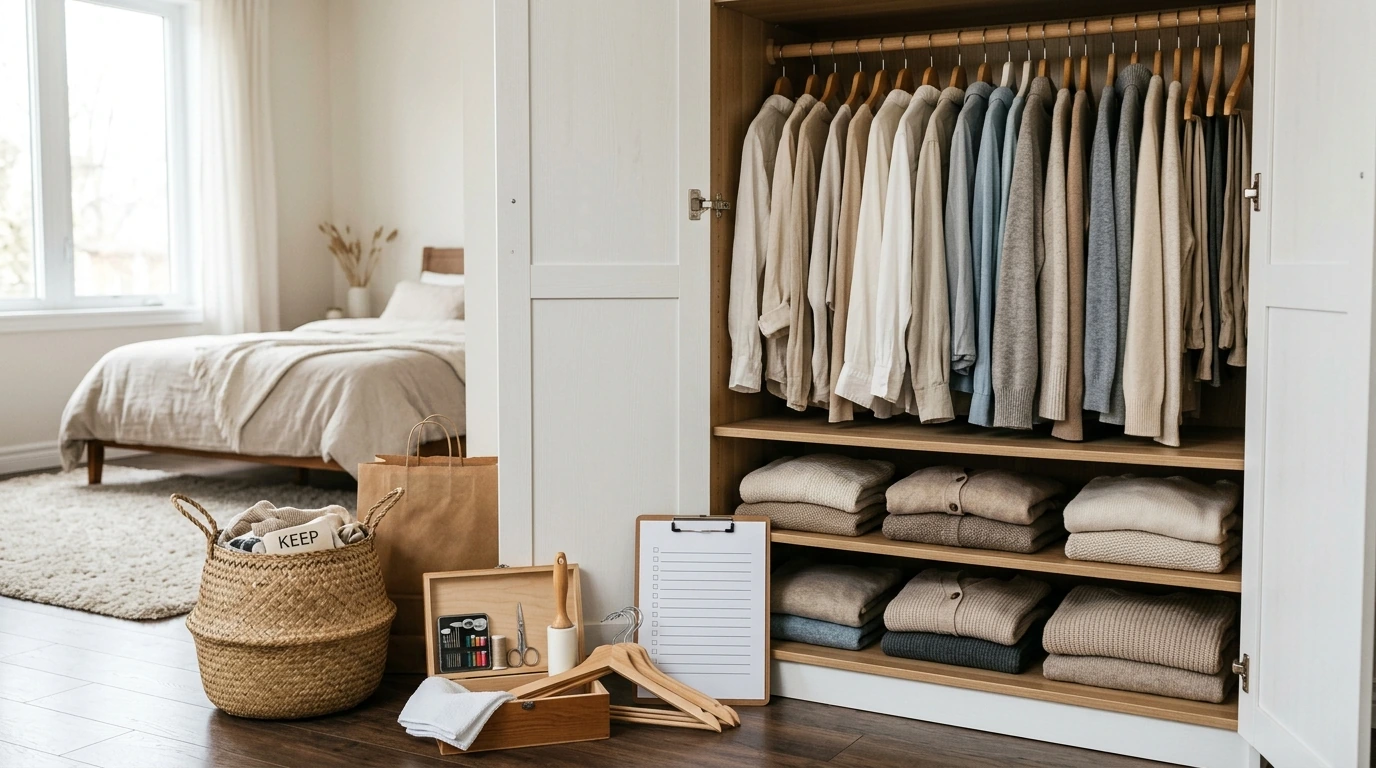
A quick closet reset works best when you make decisions in batches instead of handling every item repeatedly. Set aside 30 to 60 minutes, gather a donation bag and a trash bag, and focus on one section at a time. Our team recommends keeping the goal simple: make your everyday clothes easier to see and reach.
Choose one section, such as a shelf, a row of hanging clothes, or a single drawer. Empty that area onto your bed or another clear surface. Working in a contained space makes progress visible and keeps the whole closet from becoming a bigger mess.
Make piles for keep, donate, repair, and discard. Keep items you wear, enjoy, and can use now. Donate clean pieces that are still in good condition but no longer suit your routine. Put damaged items in the repair pile only if you will realistically fix them soon; otherwise, let them go. Discard items that are stained, worn out, or unsuitable for donation.
If you hesitate, ask yourself whether you have worn the item recently and whether you would choose it again today. Avoid creating a large “maybe” pile, since it can stall the process.
Put everyday clothes in the easiest-to-reach spots. Group similar items together—such as pants, shirts, or workout clothes—so you can find what you need without searching. Fold or hang items according to what works best for you, and leave a little open space so putting things away stays easy.
Take donation items out of the closet right away and place the bag near the door or in your car. Toss trash, and set a specific time to handle any repairs. Then move to the next section only if you still have time and energy. Completing one area is more useful than emptying the entire closet and leaving piles behind.
For a more complete checklist and tips for maintaining an organized space, read our closet detox and organization guide.
Return items to their designated groups after wearing them, and put new purchases away promptly. A brief monthly review can help you catch clutter before it builds up again.













Leave a comment