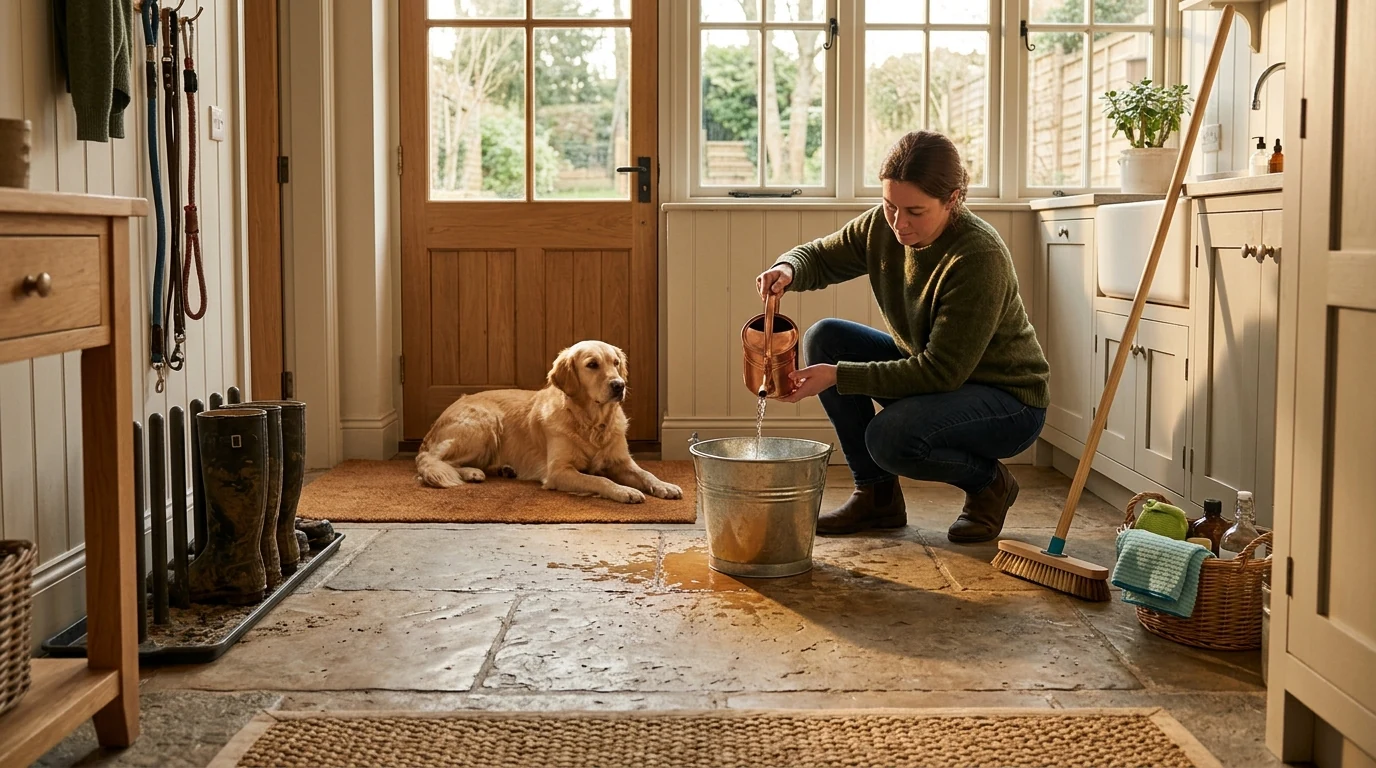
The best approach is a pet-safe floor cleaner suited to your flooring, used as directed, plus a few simple precautions. You do not need a heavily scented product to get floors clean. Choose a formula labeled for your floor type, use the recommended amount, and keep pets off the area until it is dry.
Look for a product that clearly lists its ingredients and directions. For everyday cleaning, a fragrance-free formula can help avoid unnecessary scents around sensitive noses. Avoid using concentrated cleaners, phenol-based products, or products containing essential oils where pets can contact or lick the wet surface. “Natural” does not automatically mean safe for animals.
Match the cleaner to your flooring, too. Hardwood and laminate can be damaged by excess moisture, while tile may tolerate more water. Follow the floor manufacturer’s care instructions, and never combine cleaning products—especially bleach with ammonia or acids.
For urine or other organic messes, use an enzymatic cleaner labeled for both the flooring and the type of stain. Blot first, then follow the product’s contact-time directions. Test it on a hidden spot before treating a visible area, particularly on wood or other sensitive finishes.
Clean spills promptly, wash food and water bowls regularly, and keep a washable mat under them. A quick sweep in high-traffic areas can reduce the amount of cleaner you need. Store all cleaning products securely out of pets’ reach, even when the containers are closed.
For more ingredient guidance, visit our pet-safe cleaning products label checklist.
Mop when floors look or feel dirty, and clean spills and accidents as soon as they happen. Homes with shedding pets, muddy paws, or busy feeding areas may need more frequent spot cleaning.










Leave a comment