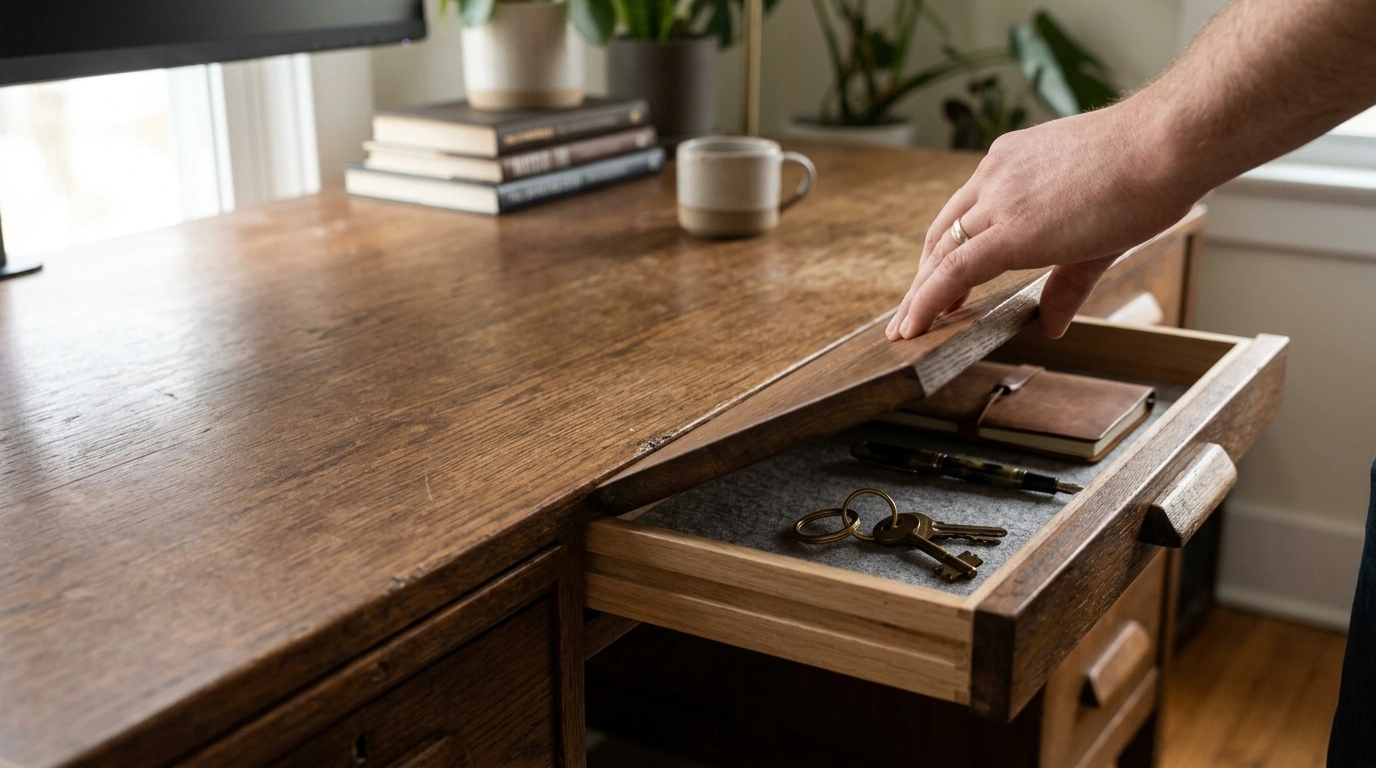
Start with a spot that is easy for you to reach but does not interfere with the room’s structure or daily use. A hollow bench, a false drawer bottom, or a removable panel in a freestanding cabinet can be simpler and safer than opening a wall. Decide what you’ll store, then measure the item and allow a little extra room to lift it in and out.
For ideas on discreet living-room storage, visit our hidden storage checklist.
Match the panel or insert to the furniture’s material and finish. Plywood works well for a concealed base or divider; choose a thickness that stays rigid under the expected load. Small hinges can support a lift-up lid, while drawer slides are better for a compartment that pulls out. A magnetic catch or push-to-open latch keeps a door closed without a visible knob. For heavier lids, use appropriately rated support hardware so the lid does not fall shut.
Often, yes. Empty the furniture and identify a section that can be modified without weakening its frame. Mark the compartment’s dimensions, cut or assemble the insert, and sand the edges. Attach the panel or drawer hardware, then test that everything opens smoothly and closes flush. Conceal seams with matching trim, a fitted cushion, or a finish that blends with the surrounding surface. Keep the opening accessible; a hidden space is not useful if you have to dismantle furniture to reach it.
Secure loose furniture to the wall when needed, especially if adding a pull-out section or storing heavy items. Keep the compartment’s load within the furniture’s capacity, and avoid storing heat-producing devices, batteries, or anything that requires ventilation inside a sealed space.
Do not cut into walls, floors, or ceilings until you know what is behind the surface. Electrical wiring, plumbing, framing, and fire-rated assemblies can make a simple project unsafe or require professional work. If you are unsure, choose a freestanding furniture project or ask a qualified contractor. Use eye protection and suitable tools, and follow the hardware manufacturer’s installation instructions.
Use it for small, nonhazardous items you want kept out of sight, such as spare keys, documents, or keepsakes. Store valuables securely and avoid items that need ventilation or could leak, overheat, or pose a fire risk.












Leave a comment