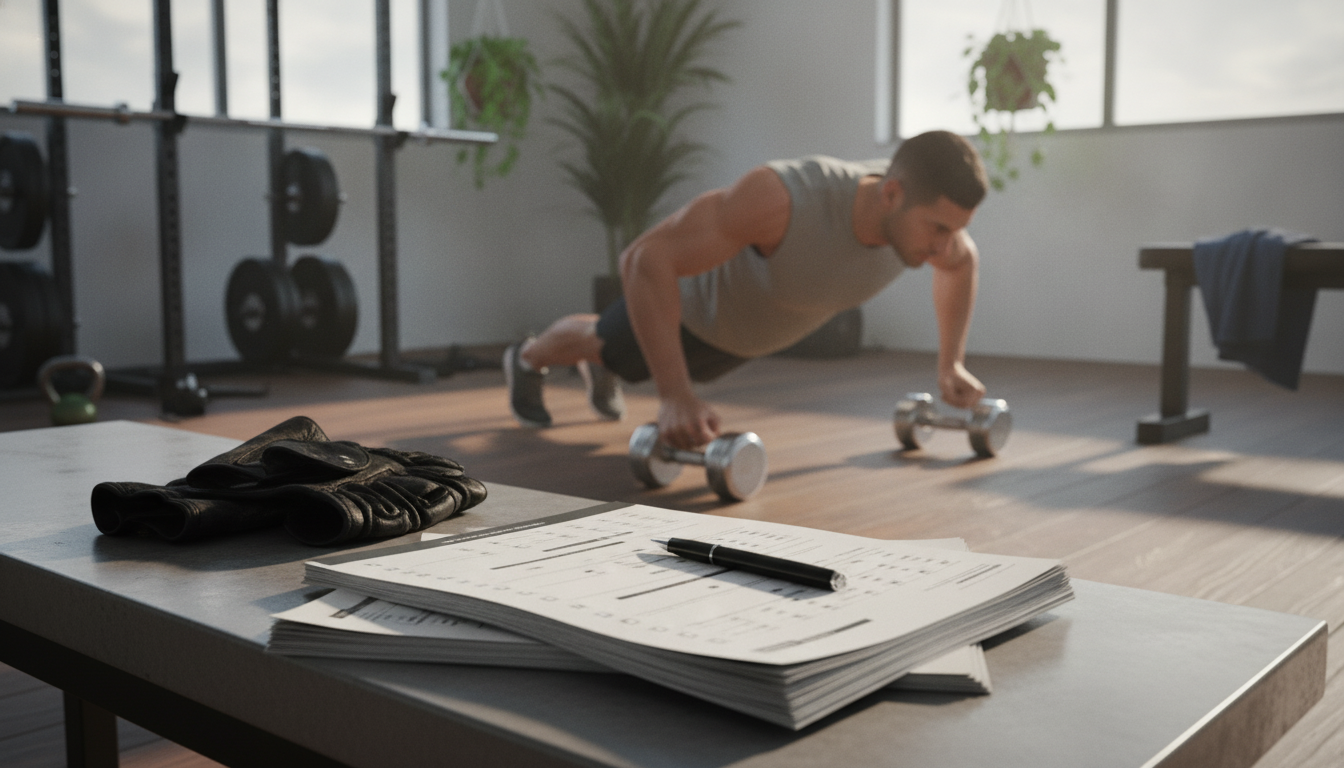
A good push-pull plan balances pressing muscles with pulling muscles, gives each group time to recover, and includes lower-body training. Here’s a practical four-day routine you can adjust to your experience and available equipment.
Train four days a week, alternating workout types. For example, do Push A on Monday, Pull A on Tuesday, rest Wednesday, then do Push B on Thursday and Pull B on Friday. Rest or take an easy walk over the weekend. If four sessions don’t fit your schedule, alternate push and pull workouts across three weekly sessions instead.
Barbell or dumbbell bench press: 3 sets of 6–10 reps; overhead press: 3 sets of 8–10; squat or split squat: 3 sets of 8–12; lateral raise and triceps extension: 2 sets of 10–15 each.
Romanian deadlift: 3 sets of 6–10; one-arm dumbbell row: 3 sets of 8–12 per side; pulldown or assisted pull-up: 3 sets of 8–12; rear-delt raise and biceps curl: 2 sets of 10–15 each.
Incline dumbbell press: 3 sets of 8–12; seated shoulder press: 3 sets of 8–12; leg press or lunge: 3 sets of 8–12; push-up and cable or band triceps pressdown: 2 sets of 10–15 each.
Hip thrust or light deadlift: 3 sets of 6–10; chest-supported row: 3 sets of 8–12; close-grip pulldown: 3 sets of 8–12; face pull and hammer curl: 2 sets of 10–15 each.
Warm up with a few minutes of easy movement and lighter practice sets before your first demanding lift. Rest about two to three minutes between compound sets and one to two minutes between accessory sets. Choose a load that lets you finish with controlled form and a couple of reps in reserve. When you can complete the top of the rep range for every set, increase the load slightly. Stop if you feel sharp pain, and adjust exercises to your comfort and ability.
For more pressing cues, read our push-day checklist for stronger presses and better form.
Leave roughly 48 hours before training the same muscle groups hard again. Use rest days for recovery, light movement, or mobility work.











Leave a comment