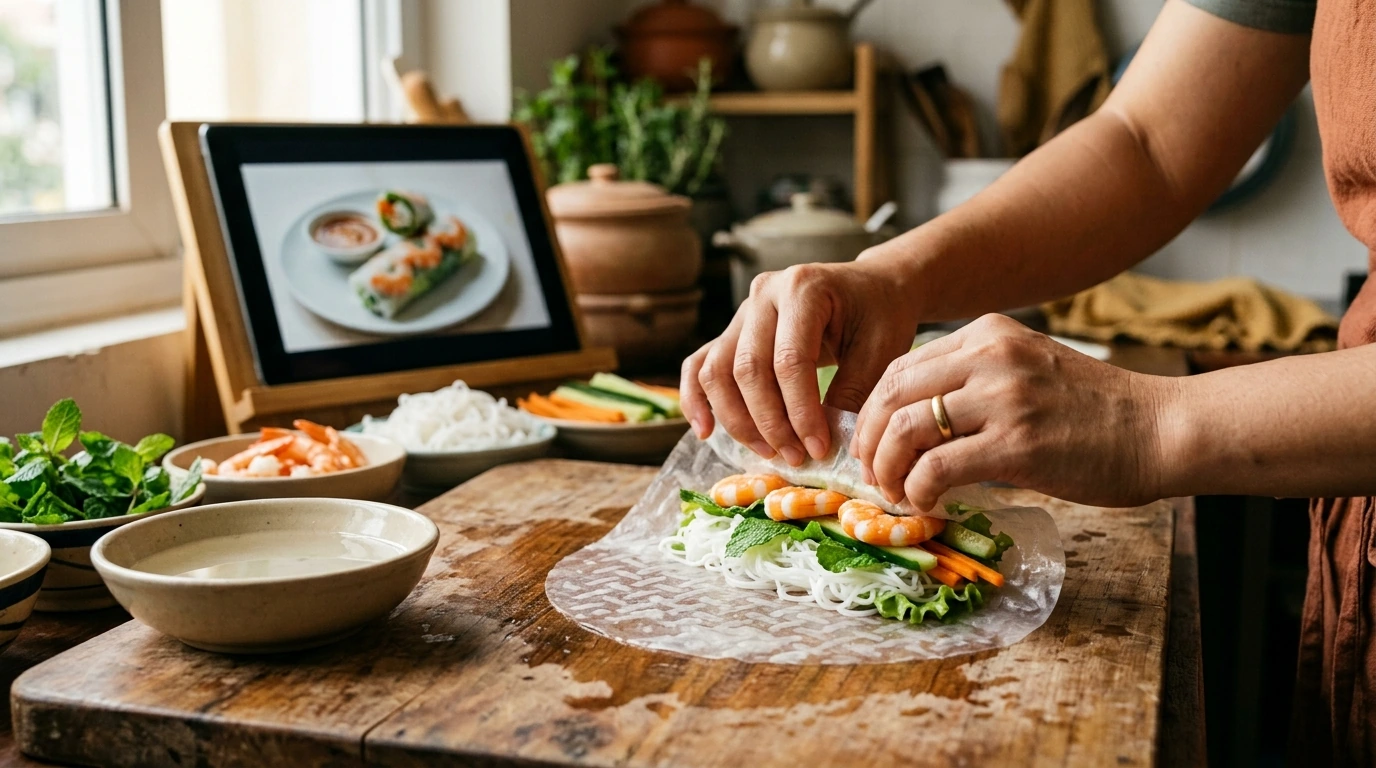
The key is balancing moisture and filling: soften the rice paper just enough to roll, and keep the ingredients fresh, cool, and dry. Overfilled or soggy rolls tear easily, while a snug roll holds its shape and lets each ingredient shine.
Get everything ready before you wet the wrappers. Cook rice vermicelli and let it cool; slice vegetables and cooked shrimp, pork, or tofu into manageable pieces. Wash herbs and lettuce, then dry them well. Excess water can make the wrapper slippery and fragile, so avoid adding wet fillings straight from the sink or pan.
Set the ingredients within reach in the order you plan to use them. A little lettuce, noodles, herbs, and protein is usually plenty. Leave room around the edges rather than piling on extra filling—the wrapper needs space to fold and seal.
Dip one wrapper briefly in room-temperature water, then lay it flat on a clean, slightly damp surface. It may still feel a little firm at first; give it a short moment to soften as you add the fillings. Soaking until it feels completely limp can make it sticky and hard to handle.
Place the filling in a neat line across the lower third of the wrapper, leaving space on both sides. Fold the bottom edge over the filling, tuck in the sides, then roll forward with gentle, even pressure. Aim for a secure roll, not a squeeze: too much pressure can split the wrapper. If a wrapper does tear, use a second softened wrapper around it.
Serve them soon after rolling for the best texture. Keep finished rolls from touching, since rice paper can stick, and cover them with a clean, barely damp cloth while you work. Pair with a dipping sauce on the side rather than adding sauce inside, where it can soften the wrapper.
For more step-by-step help, visit our Vietnamese spring roll beginner’s guide.
They’re best served soon after rolling, but you can make them a few hours ahead. Arrange them in a single layer in an airtight container and refrigerate; keep perishable fillings chilled, and expect the wrappers to firm up slightly.













Leave a comment